


Трансферирано от www.usaswimming.org
20 QUESTIONS WITH MIKE ALEXANDROV
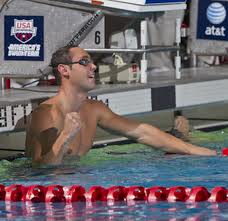
Mike Alexandrov made quite an impression at last summer’s ConocoPhillips USA Swimming National Championships, earning a spot on the 2010 U.S. Pan Pacific Championships Team and 2011 World championships Team. But he didn’t come from nowhere. He’s a two-time Bulgarian Olympian and NCAA record-holder who decided to focus on representing his adopted country, the United States.
1. How did you end up in America?
Mike: My Dad started to look for a job. He was a PT (physical therapist) in Bulgaria. He started practicing here in the U.S., in Champaign, Illinois.
Mike: My Dad started to look for a job. He was a PT (physical therapist) in Bulgaria. He started practicing here in the U.S., in Champaign, Illinois.
2. What did you first make of America when you came here?
Mike: It was so different. One of the first things was just the completely different architecture. I remember the orange fire hydrants. I always saw those in movies. So to have those on my block, I was just ecstatic. The culture is of course different. The architecture, though, is something that I am fascinated by, not just from Bulgaria to the U.S., but here in the states, from city to city.
Mike: It was so different. One of the first things was just the completely different architecture. I remember the orange fire hydrants. I always saw those in movies. So to have those on my block, I was just ecstatic. The culture is of course different. The architecture, though, is something that I am fascinated by, not just from Bulgaria to the U.S., but here in the states, from city to city.
3. How old were you when you came here?
Mike: I was 9 years old, or just turning 9. I thought America was awesome. There was a lot more to do. We were a lot more free to do whatever we wanted around here.
Mike: I was 9 years old, or just turning 9. I thought America was awesome. There was a lot more to do. We were a lot more free to do whatever we wanted around here.
4. How do you compare Bulgaria to the U.S.?
Mike: I was still growing up, so it’s hard to compare how I was living because I really didn’t have an understanding of it then. But even at that point in Bulgaria, everything was still changing. Even the pools were different from there to here. You know, I really didn’t swim that much until I came here. I swam back in Bulgaria on a team, but just casually, nothing serious at all. I didn’t have my first competitive meet until I was here. I think I was 11 years old. So you could definitely say my swimming career started here.
Mike: I was still growing up, so it’s hard to compare how I was living because I really didn’t have an understanding of it then. But even at that point in Bulgaria, everything was still changing. Even the pools were different from there to here. You know, I really didn’t swim that much until I came here. I swam back in Bulgaria on a team, but just casually, nothing serious at all. I didn’t have my first competitive meet until I was here. I think I was 11 years old. So you could definitely say my swimming career started here.
5. Were there constant reminders of the former Soviet Union in Bulgaria when you were growing up?
Mike: It had become more free, but there were remnants. I remember very clearly that it was kind of like here, being a Democrat or Republican. In Bulgaria, either you were a communist – a supporter of the party – or you were not. They were two different, divided groups.
Mike: It had become more free, but there were remnants. I remember very clearly that it was kind of like here, being a Democrat or Republican. In Bulgaria, either you were a communist – a supporter of the party – or you were not. They were two different, divided groups.
6. That experience is part of who you are though, isn’t it – having grown up in Bulgaria?
Mike: Yes, it is. I am part of that history. I am proud to be part of that history. But that’s the thing, people talk about cultural shifts and changes, but that doesn’t mean people change. In a lot of cases, the people don’t change at all. So what we have to focus on is that we are all human beings, and have that be what we all have in common. The Olympics, even though there is a lot of national pride, we are representing humanity, all of humanity. The country is secondary. It’s the Olympic spirit and saying, “Faster, higher, stronger.” We have to want that for humanity, to better ourselves, and better the world. By doing that, we can start first in our own country.
7. On a lighter note, what’s a difference between the two countries maybe not everyone is aware of?
Mike: Oh, here is a good one! There, we nod for no, and shake our head for yes. Whenever I go back, I have to switch back. Someone is like, “You want ice cream?” And I am shaking my head yes, which they take as no. It’s quite different. I think Bulgaria is the only place in the world where they do that.
8. How awesome are your folks for moving half a world away to bring you here – and the fact that you ended up at one of the premier universities in the country, Northwestern?
Mike: It’s a blessing. God has blessed us for sure. God has given us a great opportunity to be the best we can be. I am proud of my parents for pushing me to do a great job motivating me and teaching me to be the best we can do. My father helped me a lot getting into Northwestern. I hadn’t heard of Northwestern until (the coaches) recruited me. My dad said, “These coaches are the best for you, and this school is the best.” I was like, “Okay, dad, you know about these things better than I do.” My dad had gone through a lot in life, and I was, at that time, just a 17-year-old kid. It worked out well, because Northwestern was closer to home than some of the schools I was looking at, and the academics were great.
Mike: It’s a blessing. God has blessed us for sure. God has given us a great opportunity to be the best we can be. I am proud of my parents for pushing me to do a great job motivating me and teaching me to be the best we can do. My father helped me a lot getting into Northwestern. I hadn’t heard of Northwestern until (the coaches) recruited me. My dad said, “These coaches are the best for you, and this school is the best.” I was like, “Okay, dad, you know about these things better than I do.” My dad had gone through a lot in life, and I was, at that time, just a 17-year-old kid. It worked out well, because Northwestern was closer to home than some of the schools I was looking at, and the academics were great.
9. Not a lot of people know that your father was an Olympian himself for Bulgaria, wasn’t he?
Mike: Yes, he was in 1980. That was awesome. He was kicking my butt in finals until I was 17 at YMCA Nationals. Because of him (laughs), they changed the rules that you had to be under 21 to compete at YMCA Nationals, I think. There is no better way to lead than by example. Growing up competing, my father never showed any mercy. I mean he never gave me the easy way into anything. He was always supportive and helped me figure things out, which was awesome. But when he trained with me on the swim team, he just wanted to kick my behind and make me catch him. I had to get faster to do that. What a great role model.
Mike: Yes, he was in 1980. That was awesome. He was kicking my butt in finals until I was 17 at YMCA Nationals. Because of him (laughs), they changed the rules that you had to be under 21 to compete at YMCA Nationals, I think. There is no better way to lead than by example. Growing up competing, my father never showed any mercy. I mean he never gave me the easy way into anything. He was always supportive and helped me figure things out, which was awesome. But when he trained with me on the swim team, he just wanted to kick my behind and make me catch him. I had to get faster to do that. What a great role model.
10. What was his stroke?
Mike: He was a breaststroker, too. We’ve actually held the Bulgarian national record since the early 1970s. It’s like (laughs) the Alexandrov family record.
Mike: He was a breaststroker, too. We’ve actually held the Bulgarian national record since the early 1970s. It’s like (laughs) the Alexandrov family record.
11. Excuse me for saying this, but your English is better than half my friends who have English as a native tongue. How did that happen?
Mike: First of all, thank you for saying that. This goes back to a young age for me. For some reason, I have always been fairly good with languages. Even in college, my English grades were better than my biology grades, and biology was my major. Listen, here’s the important thing: part of communicating with people is them being able to understand you, and you being able to express yourself so that they can. Having a good sense of the language is an important start. If you can’t communicate, you are missing out on a lot. I remember being a 9-year-old kid here, and all the kids were playing and talking in English, and I didn’t understand a word. I was completely left out. So I worked hard, and in three months I had learned English.
Mike: First of all, thank you for saying that. This goes back to a young age for me. For some reason, I have always been fairly good with languages. Even in college, my English grades were better than my biology grades, and biology was my major. Listen, here’s the important thing: part of communicating with people is them being able to understand you, and you being able to express yourself so that they can. Having a good sense of the language is an important start. If you can’t communicate, you are missing out on a lot. I remember being a 9-year-old kid here, and all the kids were playing and talking in English, and I didn’t understand a word. I was completely left out. So I worked hard, and in three months I had learned English.
12. You were a Bulgarian Olympian and now you are a U.S. citizen, though you’ll always have Bulgarian citizenship. Do you feel like here or there is home, or both?
Mike: When I first began representing Bulgaria in international competitions, I had lived there more than I had lived there. This was in 2000-2001, so I still felt really connected, had family back home, and so on. But when I went to college and everything, the U.S. became my home. Now I have lived here more than I did there, so the separation is a bit greater. I feel comfortable, proud and fortunate to call the U.S. my home.
Mike: When I first began representing Bulgaria in international competitions, I had lived there more than I had lived there. This was in 2000-2001, so I still felt really connected, had family back home, and so on. But when I went to college and everything, the U.S. became my home. Now I have lived here more than I did there, so the separation is a bit greater. I feel comfortable, proud and fortunate to call the U.S. my home.
13. Some people might ask why try to find a spot on the most talented team in the world when you look like a shoo-in to make the Bulgarian team for 2012?
Mike: Part of joining the U.S. team means stepping up my game and pushing myself to the extreme to get to the top. If I were still training to represent Bulgaria, I would be very proud, but I would not be training as hard as I am now. I’m part of the most competitive program in the world, so I have to strive and have that eagerness to improve every day. Bulgaria is a great country, but like with most countries around the world, it’s not as competitive as the U.S. when it comes to swimming.
Mike: Part of joining the U.S. team means stepping up my game and pushing myself to the extreme to get to the top. If I were still training to represent Bulgaria, I would be very proud, but I would not be training as hard as I am now. I’m part of the most competitive program in the world, so I have to strive and have that eagerness to improve every day. Bulgaria is a great country, but like with most countries around the world, it’s not as competitive as the U.S. when it comes to swimming.
14. What did getting that NCAA breaststroke record mean to you?
Mike: That was awesome. That was when I was learning what I needed to do to be the best. That all started earlier in my senior year when I felt it coming together. I was doing what the coaches told me to do, and pushing beyond what I had done in the past, even doing more things on my own with running and lifting – pushing myself even more than the expectations that were already there. That’s why I was able to break the record.
Mike: That was awesome. That was when I was learning what I needed to do to be the best. That all started earlier in my senior year when I felt it coming together. I was doing what the coaches told me to do, and pushing beyond what I had done in the past, even doing more things on my own with running and lifting – pushing myself even more than the expectations that were already there. That’s why I was able to break the record.
15. What’s your Northwestern – and current Tucson post-grad teammate – Matt Grevers like as a college teammate?
Mike: Grevers is great. He is one of the best swimmers I have ever trained with. He pushes me all the time. He is the most competitive person all the time. The locker room at Northwestern is shared with the public, and we would be arguing with each other over who would be the best in all the events. We’d go from the 50 free all the way to the mile. We figured we were even, and it would come down (laughs) to the 200 butterfly. It was hysterical, the level of competitiveness in everything, no matter what we’d do. This happened the other day in practice, where we were just trash talking all set, and finally in the middle of the set, we’d had enough. We got out, dove in off the blocks, raced a 25 and continued with the set. That’s the attitude he brings to practice, every time.
Mike: Grevers is great. He is one of the best swimmers I have ever trained with. He pushes me all the time. He is the most competitive person all the time. The locker room at Northwestern is shared with the public, and we would be arguing with each other over who would be the best in all the events. We’d go from the 50 free all the way to the mile. We figured we were even, and it would come down (laughs) to the 200 butterfly. It was hysterical, the level of competitiveness in everything, no matter what we’d do. This happened the other day in practice, where we were just trash talking all set, and finally in the middle of the set, we’d had enough. We got out, dove in off the blocks, raced a 25 and continued with the set. That’s the attitude he brings to practice, every time.
16. You also trained with Ryan Lochte. What was that like?
Mike: Ryan is really great. I trained with him for half a year. It was different experience than I had experienced before. He is such a great swimmer and training partner. He does some ridiculous stuff in practice I can’t even touch. He’s that awesome. The breaststroke was the only thing I am good at, so I was able to help him a little with that, but he helped me with my backstroke, my IM and a lot of things. It was a great experience.
Mike: Ryan is really great. I trained with him for half a year. It was different experience than I had experienced before. He is such a great swimmer and training partner. He does some ridiculous stuff in practice I can’t even touch. He’s that awesome. The breaststroke was the only thing I am good at, so I was able to help him a little with that, but he helped me with my backstroke, my IM and a lot of things. It was a great experience.
17. What is Lochte like as a person?
Mike: He was just very outgoing, but always ready to go when we got in the water. In terms of personalities, he reminds me of someone I train with now at Arizona – Amanda Beard. Both are smiling and carefree and free spirited. The coach can tell them to do 10×100 all out, and they’d be like, “Haha, okay, let’s go,” and I’d be all serious. They just have great attitudes.
Mike: He was just very outgoing, but always ready to go when we got in the water. In terms of personalities, he reminds me of someone I train with now at Arizona – Amanda Beard. Both are smiling and carefree and free spirited. The coach can tell them to do 10×100 all out, and they’d be like, “Haha, okay, let’s go,” and I’d be all serious. They just have great attitudes.
18. How incredible is Amanda, some 15 years out of her first Olympic experience in Atlanta?
Mike: Now she’s even better, if you ask me. We train and coach each other, partner on pull sets on Tuesdays and Thursdays. Frank (Busch) gives just the two of us some sets. She can always keep up and can sometimes beat me. I mean, this is a woman who did 43 pull-ups the other day. Come on, who does that?
Mike: Now she’s even better, if you ask me. We train and coach each other, partner on pull sets on Tuesdays and Thursdays. Frank (Busch) gives just the two of us some sets. She can always keep up and can sometimes beat me. I mean, this is a woman who did 43 pull-ups the other day. Come on, who does that?
19. How did you end up in Arizona and how do you like it?
Mike: It’s awesome. Grevers is the one to blame (laughs) for that, too. He moved out here, and I came to visit him two and a half years ago for his birthday in March. He wanted me to check things out, and I thought, hey, why not? I was here three days and cancelled my ticket home. I stayed two weeks, loved it, and ended up moving here. It’s a great place to train. There are not a lot of places to go out, but it’s nice here because you can focus on what you have to do, and you have perfect weather. It’s just a perfect place to train, and we have great coaches. I have to give Rick DeMont a lot of credit, because working with him has been great. He’s very aware, and very smart.
Mike: It’s awesome. Grevers is the one to blame (laughs) for that, too. He moved out here, and I came to visit him two and a half years ago for his birthday in March. He wanted me to check things out, and I thought, hey, why not? I was here three days and cancelled my ticket home. I stayed two weeks, loved it, and ended up moving here. It’s a great place to train. There are not a lot of places to go out, but it’s nice here because you can focus on what you have to do, and you have perfect weather. It’s just a perfect place to train, and we have great coaches. I have to give Rick DeMont a lot of credit, because working with him has been great. He’s very aware, and very smart.
20. This is kind of a tough question to toss at you at the very end, but can you somehow give us a glimpse of what it means to represent America on the National Team this past year, and try for the Olympics?
Mike: It’s huge for me. My father had a dream to come here and to completely take advantage of the opportunities. This is the best place to chase your dreams, and to never stop dreaming bigger. This is the best place to enjoy life. America gives you it all if you are willing to do the work. Nowhere else in the world can you do what we can do here. I am so proud to be part of these ideals, this concept of America and its greatness. USA Swimming is a great example of America at its best. We are the best because we are united. The support staff is the best, the coaches are the best, the resources are the best, the people are the best, and the swimmers are the best. America became great because people came together, not because they were torn apart. You succeed as a team. That’s why Team USA is the best team. And we will continue to be the best, because everybody is giving 100 percent. No other team in the world does that. That’s why this means the world to me. It is AWESOME to be a part of this. You know what happened in Dubai? I was on the pool deck, and guys from THREE other countries on the deck at that time came up to me and said, “I wish I were you right now. I wish I was representing the USA.” I was that guy not long ago. So I’m not going to let go of this dream without giving 100 percent of what I have every single day to this great country and everyone who wants to help me succeed. That’s what you do in America. And now, I can proudly say that I am an American.
Mike: It’s huge for me. My father had a dream to come here and to completely take advantage of the opportunities. This is the best place to chase your dreams, and to never stop dreaming bigger. This is the best place to enjoy life. America gives you it all if you are willing to do the work. Nowhere else in the world can you do what we can do here. I am so proud to be part of these ideals, this concept of America and its greatness. USA Swimming is a great example of America at its best. We are the best because we are united. The support staff is the best, the coaches are the best, the resources are the best, the people are the best, and the swimmers are the best. America became great because people came together, not because they were torn apart. You succeed as a team. That’s why Team USA is the best team. And we will continue to be the best, because everybody is giving 100 percent. No other team in the world does that. That’s why this means the world to me. It is AWESOME to be a part of this. You know what happened in Dubai? I was on the pool deck, and guys from THREE other countries on the deck at that time came up to me and said, “I wish I were you right now. I wish I was representing the USA.” I was that guy not long ago. So I’m not going to let go of this dream without giving 100 percent of what I have every single day to this great country and everyone who wants to help me succeed. That’s what you do in America. And now, I can proudly say that I am an American.